Navigation Systems
 Fleet Manager
 TOOLS & EXTENSIONS
.png?width=1200&height=675&name=BB%20Support%20(1).png)
.png) ENGINEERING
ENGINEERING
.png)
.png) COMPANY
COMPANY
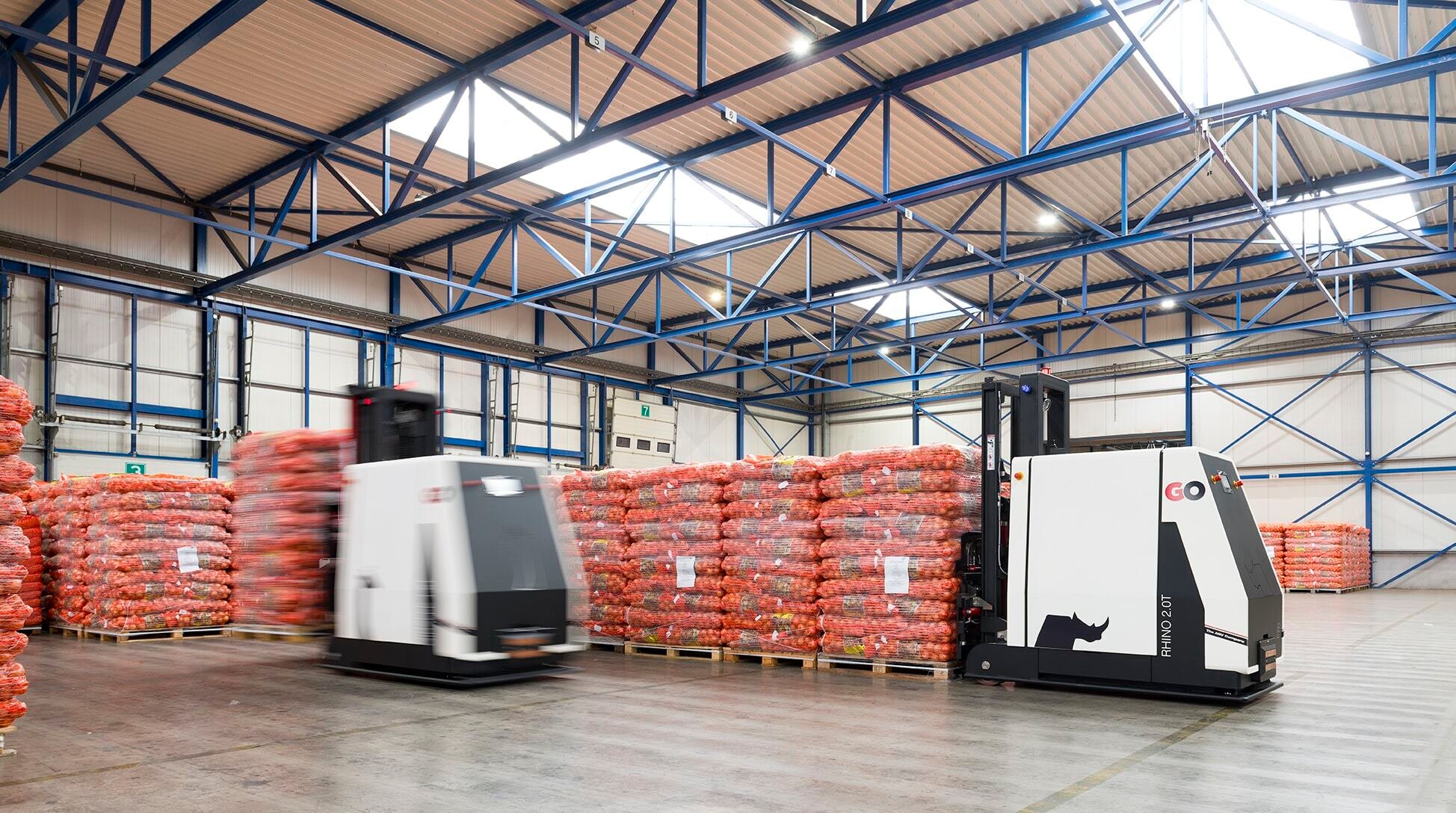

ANT is a robust and fleet-ready natural feature navigation system. But how precisely can it position an AGV or AMR? This quick guide explains all.
How accurate is ANT natural feature navigation?
ANT is a type of natural feature navigation (sometimes called ‘natural navigation’, 'free navigation' or ‘SLAM navigation’). It is accurate to ±1 cm and ±1°, which means it suits 99% of modern manufacturing and intralogistics applications.
How is this accuracy achieved?
ANT’s positioning algorithm uses a combination of odometry and LiDAR data.
Odometry is used to estimate a vehicle’s position, based on measuring its speed via encoders on its wheels. In parallel, ANT uses data from the vehicle’s 2D LiDAR scanners (often its safety lasers) to extract features in the environment — such as walls and pillars — and then compare these features with a map of the site that is stored onboard. The ANT algorithm then fuses the odometry estimation with the laser measurements, and corrects the vehicle’s position accordingly. This process takes place up to 20 times per second (and because it takes place onboard the vehicle, the system does not rely heavily on Wi-Fi to communicate back and forth with the fleet manager).
If odometry alone was used, the vehicle’s position would be prone to drift over time. And if LiDAR alone was used, two problems would occur: false matches would become an issue, and should no features be visible the vehicle would become lost. ANT’s combined approach negates these risks, leading to proven positioning performance.
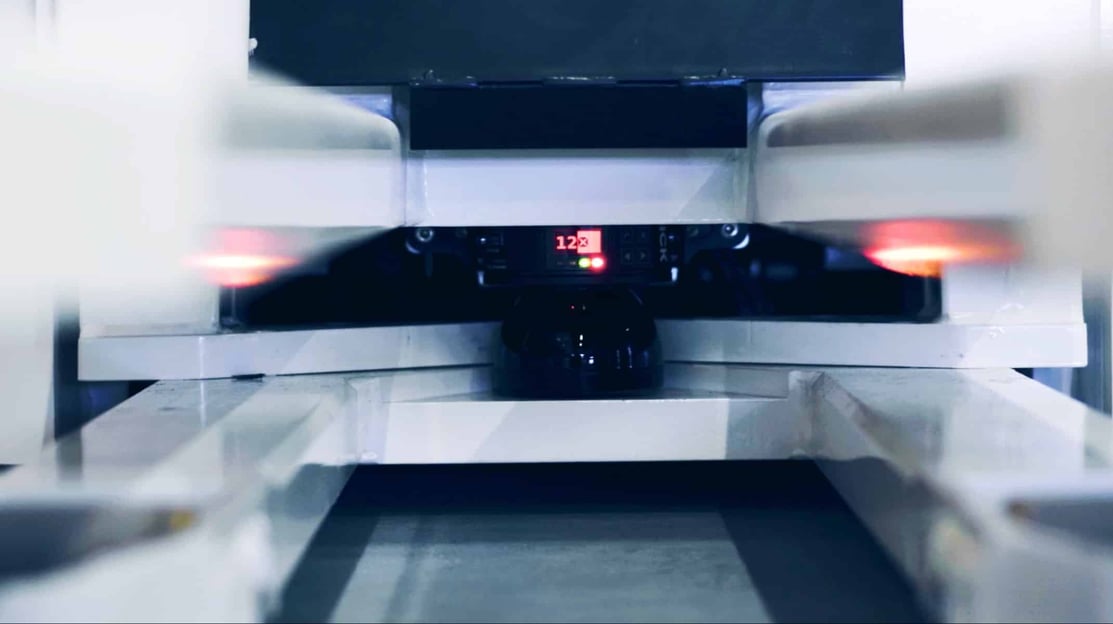 Data from a vehicle's LiDAR scanner(s) is used alongside odometry to precisely calculate the position of an ANT driven vehicle.
What about the accuracy of pick and drop operations?
A vehicle knowing its own position is one thing, but accurately detecting and picking up an object is quite another.
The key to success is having a navigation system flexible enough that it can cope with a little imprecision. That’s where ANT trackers come in.
ANT tracker is a set of features, which are configured in our ANT lab configuration software. Several different types of trackers are available, each designed to detect a different category of object (pallet, rack etc.).
In ANT lab, the user simply defines a ’payload detection area’ (the approximate spot where a pallet or object will be found). Trackers then use a vehicle’s laser scanner data to identify the features of a target object, such as a pallet or rack. With this position known, ANT corrects the vehicle’s trajectory—as the vehicle is moving—to ensure accurate detection and pickup.
This video explains more:
Is accurate localization possible outdoors?
Yes. The exact same 1 cm localization performance is also possible outdoors when using our ANT everywhere product extension.
This system adds GNSS data to the mix. A base station installed on a nearby rooftop receives positioning and timing data from GNSS satellites. The base then corrects this data, transforming the standard GNSS accuracy of around three meters to centimeter level, before sending these corrected coordinates to an ANT everywhere receiver on the vehicle and into ANT’s navigation algorithm.
Thanks to sensor fusion, all of ANT’s sources of positioning data run concurrently. ANT simply uses whichever data is available – indoors, odometry and laser scanners, outside GNSS.
This video explains more:
What our customers say about the accuracy of ANT navigation
Repeatable accuracy is one of the key benefits our customers mention when discussing ANT. This robustness is crucial to commissioning end customer projects that run reliably, month after month and year after year.
As Michael Marcum of Toyota Automated Logistics (previously Bastian Solutions) puts it, “BlueBotics’ ANT technology is very sound. Its ability to follow a path and follow it precisely was a game changer for us.”
Speaking about the main concern he had before working with BlueBotics, Martin Ruhland from Kyneos Automation, says, “As with any new technology partnership, our main concern was whether the localization system would be precise and robust enough for our highly dynamic truck loading and unloading applications. The system runs very reliably, which allows our team to focus fully on the customer’s application rather than worrying about the localization technology. It simply works.”
And speaking about ANT’s precision outdoors, Joseph Cotterill of MasterMover, says, “BlueBotics’ GNSS solution allows for precise outdoor navigation — something we couldn’t achieve with our previous systems — which has opened up new possibilities for outdoor AGV applications.”
Ready to talk?
If you have questions about ANT navigation or would like to book a demo call with our team, please get in touch.
Let's get started
Take the first step to automating your vehicle.
Schedule a call with our expert team today.