Navigation Systems
 Fleet Manager
 TOOLS & EXTENSIONS
.png?width=1200&height=675&name=BB%20Support%20(1).png)
.png) ENGINEERING
ENGINEERING
.png)
.png) COMPANY
COMPANY

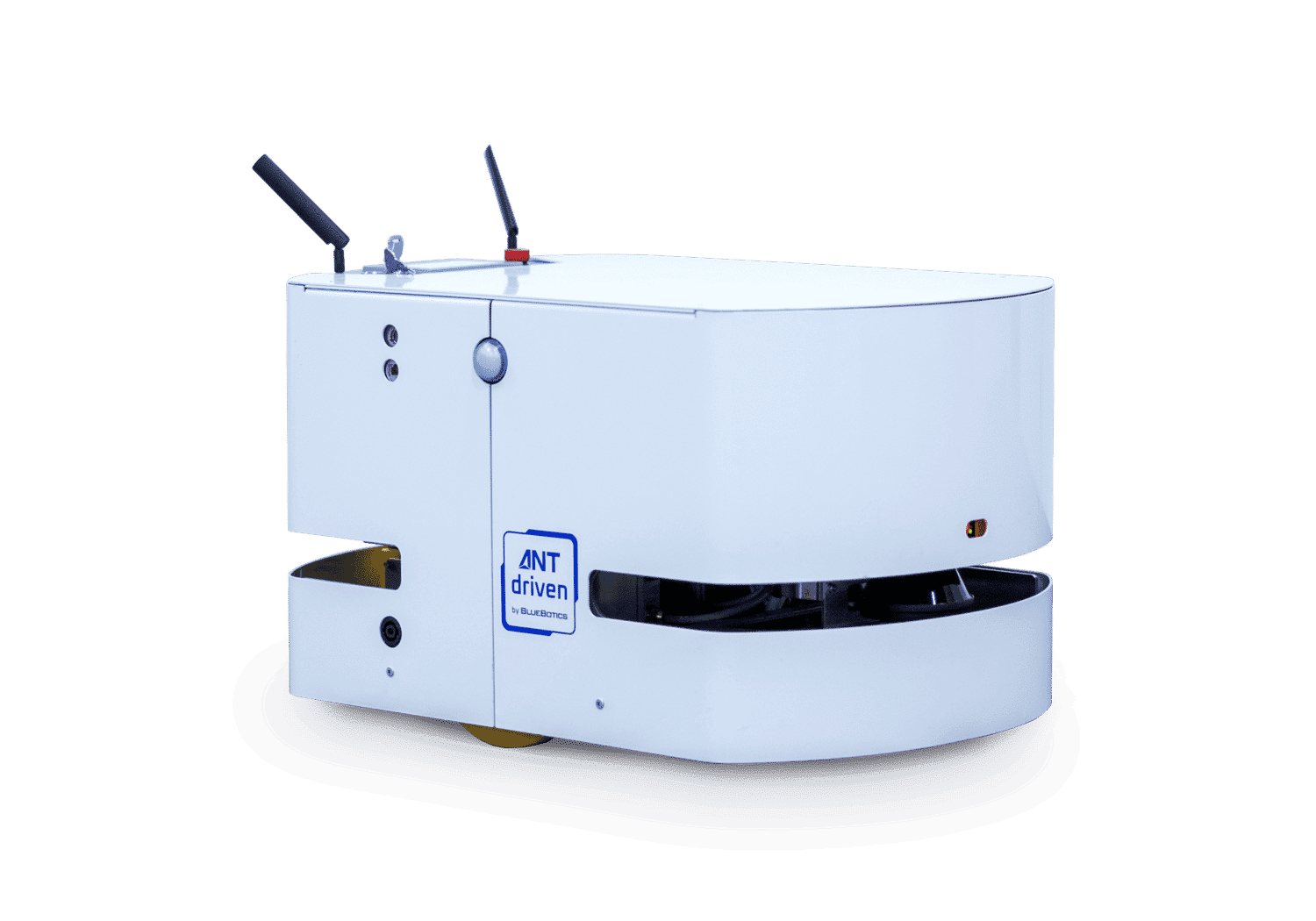
Are you considering developing an AGV or AMR? To help you avoid costly mistakes, below are eight crucial points to consider before you kick-off your project, based on our 25 years of automation experience at BlueBotics.
1. Automate an existing manual vehicle or build an automated vehicle system (AGV/AMR) from the ground up?
The first thing to consider is whether to automate an existing manually-driven vehicle or create a new automated vehicle from the ground up. There are advantages and disadvantages to each approach.
- Adding automation to an existing vehicle may be more cost-effective than creating a new vehicle from the ground up, at least during the prototyping stage. When moving into production however, you may find this adds unnecessary expense as some parts – such as the steering wheel if creating a non-hybrid vehicle – may not be necessary.
- Creating a new vehicle may allow you to add extra functionality (on top of autonomous navigation), such as a conveyor belt or robotic arm.
Keep in mind that not all hardware can be automated smoothly. Some manually-driven vehicles may not readily accept automation; for example, drive technology and control systems may need to be replaced with new versions that are easier to automate.
Tip: Define what features your automated vehicle system will need, and which of its existing components are not automation-ready. This will help you assess whether you can add automated guidance easily, or whether it would be better to start from scratch.
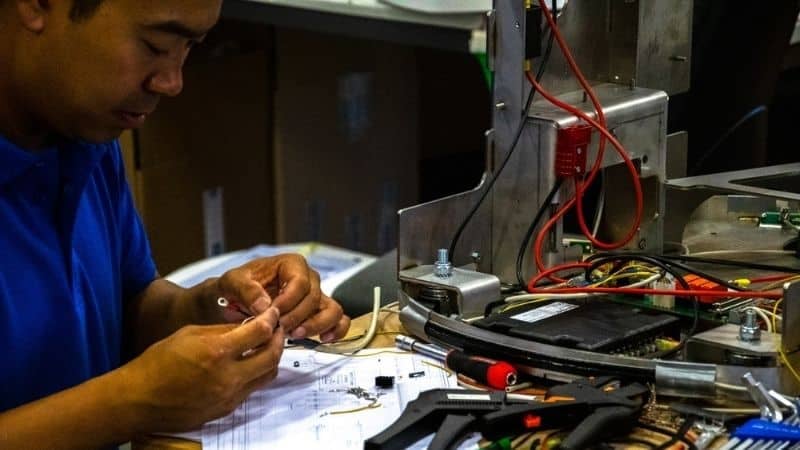
Not all hardware readily accepts automation; some parts may need to be swapped out.
2. What type of autonomous navigation technology?
When it comes to your vehicle knowing its position and moving autonomously around a customer’s site, what type of navigation technology will you choose for your new offering – physical line following, laser guidance, natural navigation, or another type of guidance? Each different technology has its pros and cons, with natural navigation being the most flexible and robust option overall.
You should also consider connectivity. A vehicle’s routes and actions (i.e. lift forks) can be pre-programmed and saved onboard the vehicle (what we at BlueBotics call ’embedded mission control’), but if part of a larger fleet your vehicle will need access to wireless communication in order to communicate with its fleet management server software and infrastructure, such as automatic doors and elevators. The strength of signal required depends on the type of navigation technology in question.
Vehicles driven by ANT technology, for instance, do not require constant WiFi access when performing their individual roles – a low-bandwidth connection is only required in order to interact with infrastructure or other vehicles in a fleet.
Tip: Investigate the pros and cons of different navigation technologies to decide the best fit technology for your vehicle.
3. Focus on safety
The business case for putting safety first is clear: safe customers are repeat customers.
Or consider the opposite: if one of your products is involved in a major incident, how likely would that customer be to purchase again, or to recommend your business? Not very.
When developing your AGV/AMR, first ensure you know and understand the rules and regulations of your region or industry sector. And if you are thinking internationally, widen this research to all your target markets (EU regulations and US regulations, for example, are notably different).
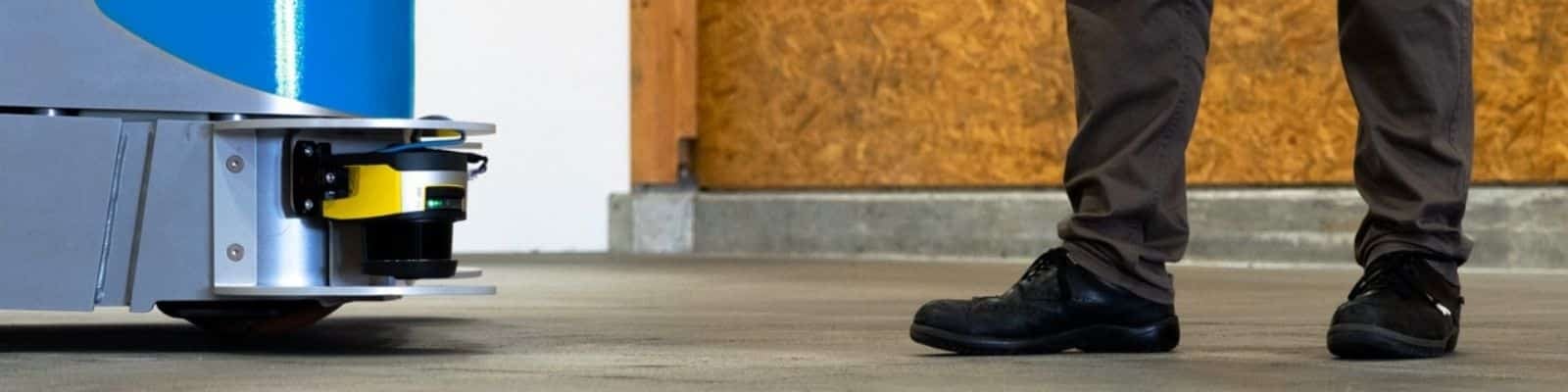
Ensuring your AGV can be legally used around the world — by incorporating the correct LiDAR scanners, e-stop buttons, bumpers and so on —will result in a safer vehicle overall, and your sales team will thank you.
Most importantly, understand that a vehicle navigation system is not a safety system, nor safety certified. Your vehicle however must be.
Read this safety blog post to learn more.
4. Is your team automation-ready?
Does your team have the full complement of skills – mechanical, electronic and engineering – required to develop a mobile robot? If not, you may need to work with an outside partner or bring in additional talent.
Gaps in your team’s knowledge can cause costly mistakes (like installing a component that cannot be automated), or lengthy delays (as your team scrambles to upskill).
It is therefore worth taking the time to find out exactly what skills are needed to create an AGV, while honestly evaluating what your team is capable of.
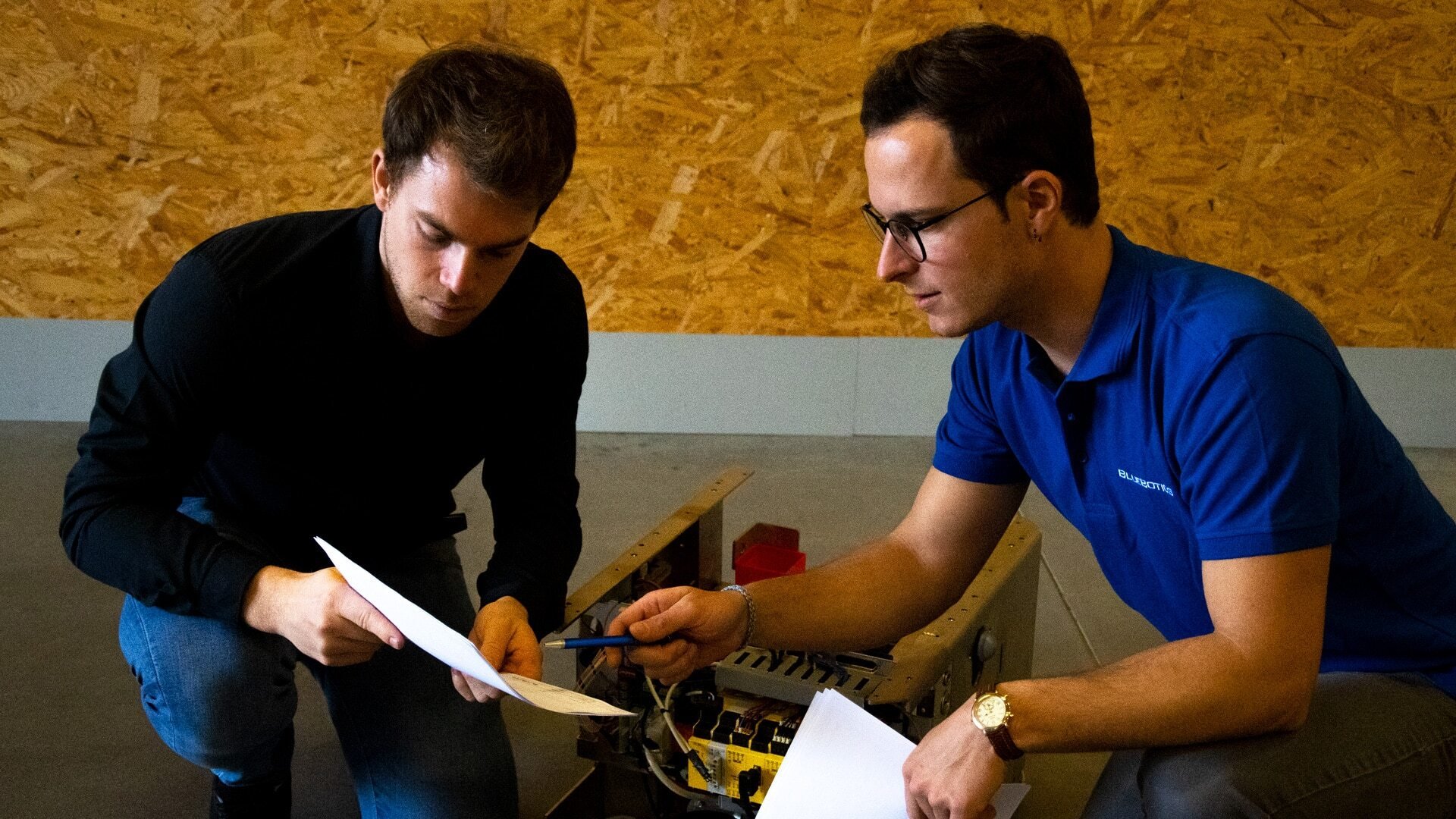
Does your team have the skills required to automate a vehicle?
Even if you have all the required knowledge in-house you might still want to build out a larger team, because if you have only a single point of knowledge for your AGV project, it could grind to a halt if that team member leaves. And while your team may have all the skills to handle the complex mechatronics work involved, that does not mean they have the time to do so. You might need to put other projects on hold in order to add automated vehicles to your portfolio.
Finally, consider the need for technical post-sales staff who can travel to customer sites to actually commission your AGVs. If the staff you send to get your customers’ robots moving are the same people who developed them, this will of course slow down any new development work. It may therefore be more efficient to build out a separate team to handle installations and future client project updates.
Tip: Make a list of the skills and know-how you will need for your project, then compare this list to the team you already have. Does your team have the skills, or can existing team members be upskilled? Don’t forget post-sales support.
5. Power up
Tip: Scope out the different types of power systems available – you may find that the availability of parts makes the decision for you.
6. Know your target industries
Just developing a generic mobile robot that performs the basics is rarely enough. Instead, companies that develop a vehicle with a small number of specific industries and use cases in mind tend to enjoy greater success.
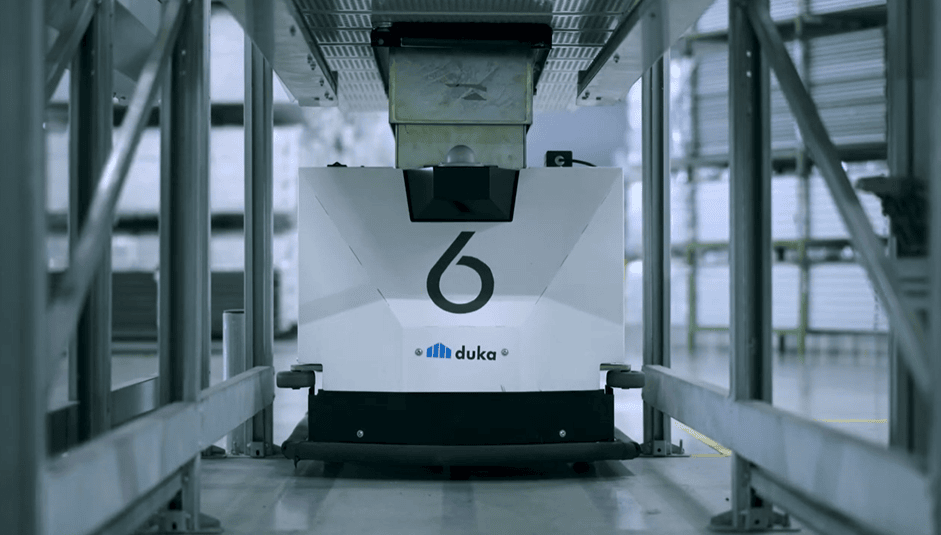
For example, if you plan to try and sell your AGV into the automotive sector, its price point will need to be ultra-competitive, your clients’ demands will be strong and continuous, but your vehicle likely won’t need to offer super-agile omnidirectional movement.
However, if you target food, beverage, or pharmaceutical users, their budgets may be more flexible but hygiene and contamination concerns will need to be top of mind, support for extreme working temperatures might be required, and cleanroom certification could be necessary.
Tip: At BlueBotics we have seen a local focus benefit robot makers who are just starting out; focusing on a segment that offers solid commercial potential and which has potential clients located nearby can make winning those first all-important reference projects easier (since in your clients’ minds you’re ‘just down the road’ should anything go wrong).
7. Think about software integration
Your automated vehicles will most likely require a fleet manager to handle mission dispatch and manage traffic. Although all fleet controllers or supervisors are not created equal, most autonomous navigation vendors supply some version of this software.
.jpg?width=1200&height=800&name=Software%20integration%20of%20AGVs%20(1).jpg)
However, you need to consider how this software will interact with your customers’ existing WMS, ERP, or MES systems. Specifically, how do you plan to provide the logic necessary for tasks at WMS level to be translated to fleet manager missions?
-
Do you have the software development capacity in-house to ‘bridge this gap’ by developing a custom interface?
-
Will you pay a third-party software partner to develop the same?
-
Will you instead research and adopt an off-the-shelf middleware product?
-
Or will you simply ask your customers to handle this interfacing themselves?
In the case of BlueBotics, for example, our ANT server fleet manager features a Rest API and an ever-increasing range of built-in middleware-like features to help you meet this challenge.
8. Pick the right automation partner
When researching suppliers, first check how long they have been in business, so you can feel confident you are not their very first customer. Ensure they have worked on vehicles and applications similar to yours, and ideally that they have staff based close to you for more convenient support (or alternatively, staff who are happy to travel to you as required). What about existing customers: are you able to speak with any direct?
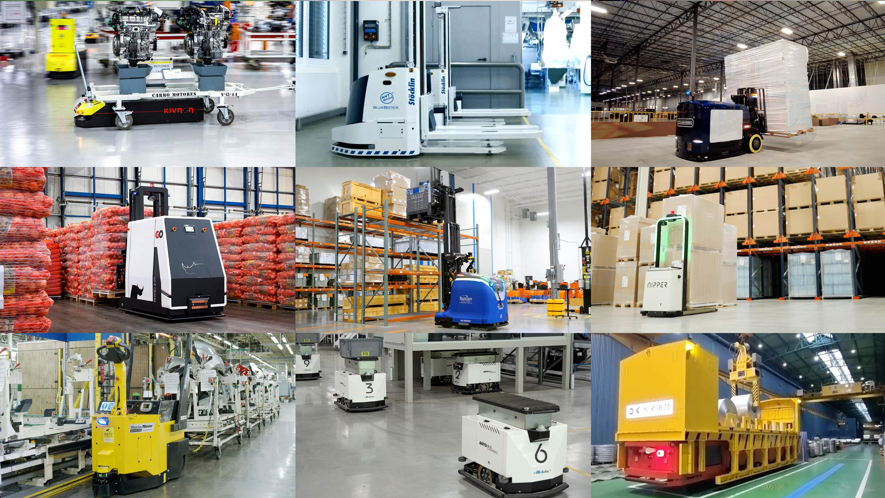
BlueBotics’ ANT navigation and fleet management technology today drives more than 7,000 AGVs and AMRs around the world and is built on more than 25 years of BlueBotics automation experience. Click to explore the 170+ ‘ANT driven’ vehicle models on the market today.
Tip: Make a list of potential automation partners and check their references carefully.
Just some of the more than 7,000 vehicles which are driven by ANT navigation.
Ready to get started?
If you’re ready to take the next step on your automation journey, explore ANT technology, or get in touch to discuss how we can help you add automation to your vehicle portfolio.
Let's get started
Take the first step to automating your vehicle.
Schedule a call with our expert team today.