Navigation Systems
 Fleet Manager
 TOOLS & EXTENSIONS
.png?width=1200&height=675&name=BB%20Support%20(1).png)
.png) ENGINEERING
ENGINEERING
.png)
.png) COMPANY
COMPANY

To delight customers and ensure the profitability of your AGV or AMR sale, quick and efficient commissioning (installation) is the key.
Commissioning (installing) a vehicle on a customer site is generally the most critical time of a project. It can also be the most stressful and expensive.
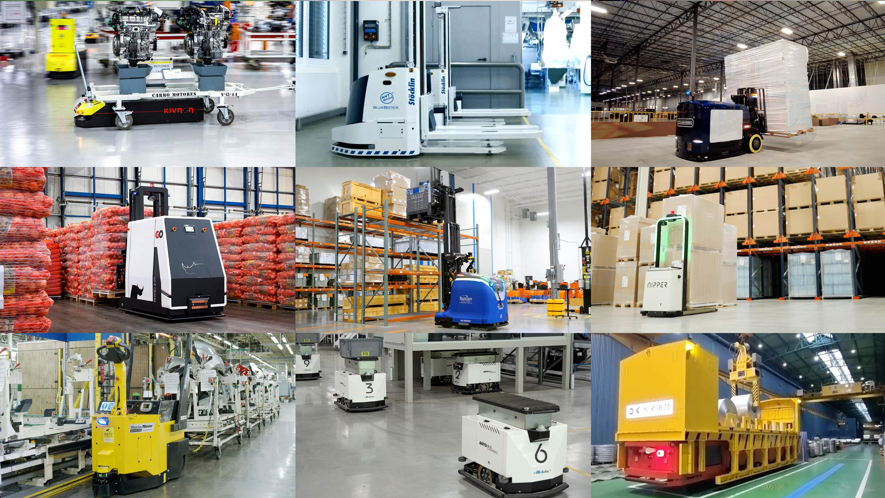
BlueBotics’ team of expert engineers has installed, and helped customers to install, hundreds of AGV, AMRs and automated forklifts at sites around the world. Drawing on over 25 years of industry experience, we’ve rounded up seven top tips for AGV/AMR commissioning success.
1. Plan, plan and plan again
The better you understand your customer’s site, and how their automated guided vehicles will operate within it, the smoother the AGV commissioning process will run.
“An ideal installation happens when the AGV buyer is well prepared, which helps you to be well prepared”
- Mathias Perrollaz – Head of Systems Engineering at BlueBotics
This means that your customer must have considered its desired AGV or AMR operation in-depth.
To ensure that is the case, here is a quick checklist of questions to ask prior to your arrival on-site:
“An ideal installation happens when the AGV buyer is well prepared, which helps you to be well prepared,” says BlueBotics' Head of Systems Engineering, Mathias Perrollaz. “If everything can be prepared well in advance – routes, actions, nodes – then your installation team will just need to concentrate on tuning the vehicle and mapping the site.”
2. NEVER install an AGV that is not ready
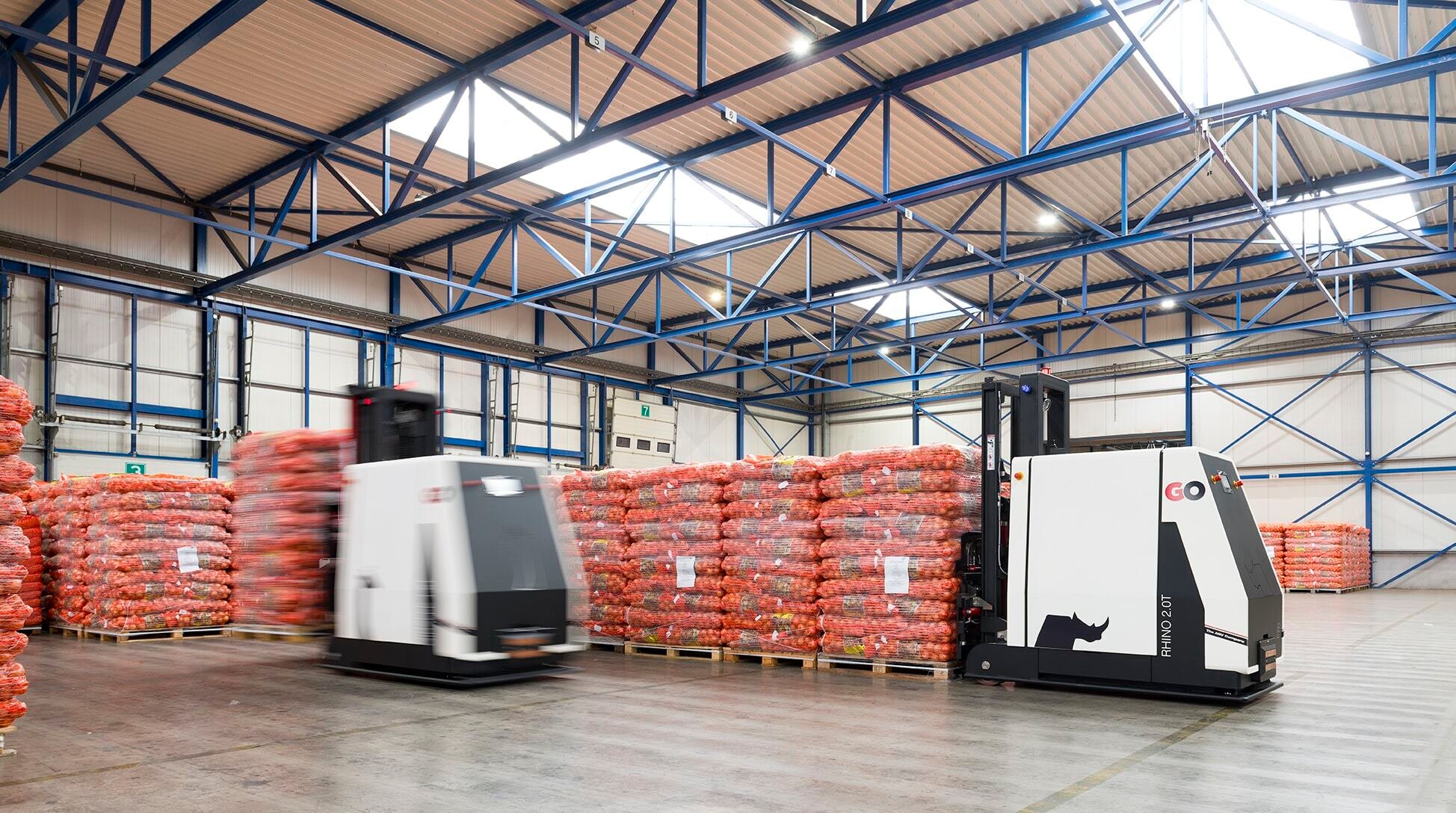
According to BlueBotics’ VP of Development, Grégoire Terrien, probably the worst mistake a company can make is to try and install a vehicle that is not ready.
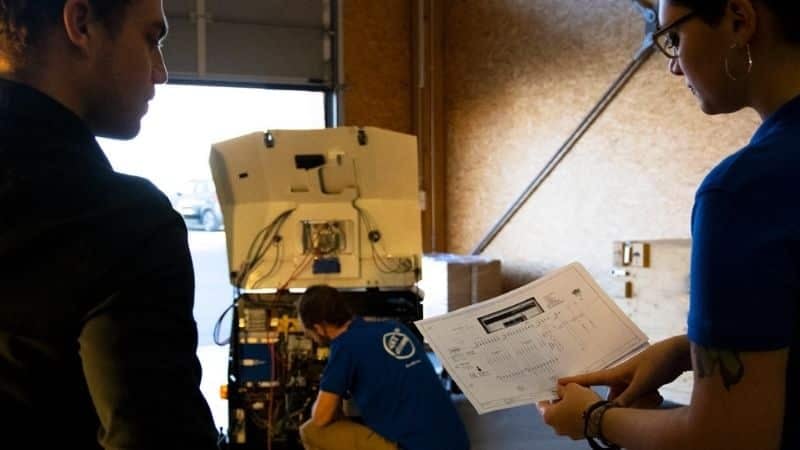
Creating an automated vehicle is a complex task. And it’s one that must be completed before arriving on site.
“If everything can be prepared well in advance – routes, actions, nodes – then your installation team will just need to concentrate on tuning the vehicle and mapping the site.”
“Many companies – especially startup producers – feel the need to grow fast and therefore rush to install a vehicle that is not ready to be installed. This never goes well,” he explains. “It means effectively finishing your vehicle at the customer’s site, which gives a terrible impression and usually leads to bad vehicle performance.”
Commissioning a vehicle is expensive for you, exhausting for your staff, and (as production may be shut down for an undefined period of time) risky for your customer. Commissioning a vehicle which is not ready is exponentially more expensive, exhausting and risky.
3. Pay close attention to environmental factors
This should be part of the planning process, but it is worth highlighting: do not underestimate the potential of small environmental factors to bring a commissioning process to a grinding halt.
System engineer Guillaume Rosa-Serrano provides an example: “The laser scanners used for localization on one company’s AGV were 2.7 meters above the ground. At one customer’s site the floor sloped down to the center in a soft V-shape, to make sure any water drained away. The AGV was supposed to see the walls of the room as references. The initial installation was done with empty pallets in place and everything worked fine. But, when real pallets were added, the AGV would always become lost because the full pallets were 2.60 meters high which, with the V-shaped floor, meant the AGV could not see any walls at all.”
Once the issue was detected, the team were able to quickly correct it – but this example demonstrates that the environment must be taken into account.
When working with the simulation (and then later on site) consider the following points:
- Is there enough space for the vehicles to navigate? Is there sufficient space for safety fields (the virtual dimensions of a vehicle which are larger than the physical dimensions)?
- Can vehicles cross/pass each other? Is it possible to limit the number of bidirectional links?
- How many chargers are needed? Is it possible to have one charger per vehicle? What should the charging strategy be?
- Are there enough parking spots so the vehicles can all be parked without blocking traffic? Is it possible to position some parking spaces close to pickup points to optimize traffic?
ANT offers a lot of tools to help with these issues, such as charging strategies which favor vehicles with the lowest charge, and traffic management for large vehicles which may block others while turning. In fact, any issue you have, it’s likely that our Support Team has worked through it before. Get in touch and there might be a solution waiting for you.
4. Have all hardware components ready
It is important to have access to your vehicle’s components during installation in order to avoid delays, says Terrien: “This is particularly important for drives – you might need to tune their parameters or replace them if not. You should also prepare safety components so you have these on hand, like redundant encoders.”
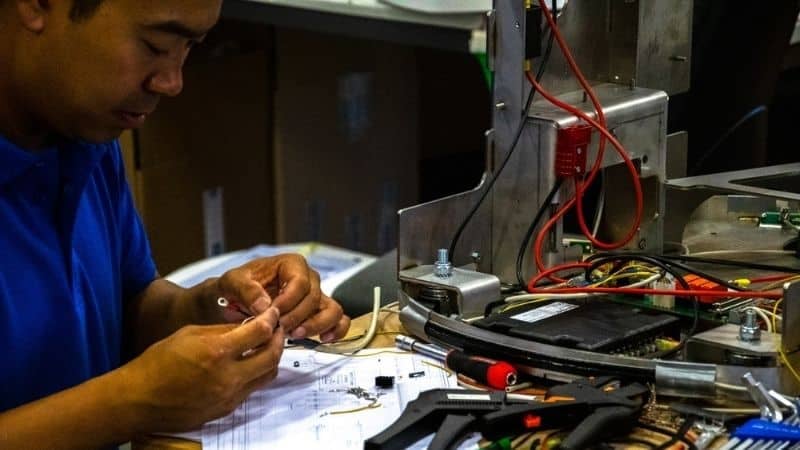
Commissioning a vehicle may require tweaking components on site.
5. Simulate and test your project
Before deploying your client’s AGVs, always fully simulate the project you have created.
In the case of automated vehicles that run on BlueBotics’ ANT lite+ platform, simulations are carried out using ANT server and ANT vehicle simulator software. This allows you to simulate not only basic missions such as single-vehicle picking and dropping, but even full fleet operations including traffic management. It is possible to remotely create a digital twin of the customer site in ANT server using CAD files of the building. You can then add the installation in ANT server and ANT vehicle simulator to anticipate and solve issues before they happen.
“Before deploying your client’s AGVs, be sure to fully simulate the project you have created.”
6. Ensure your client’s team are well trained
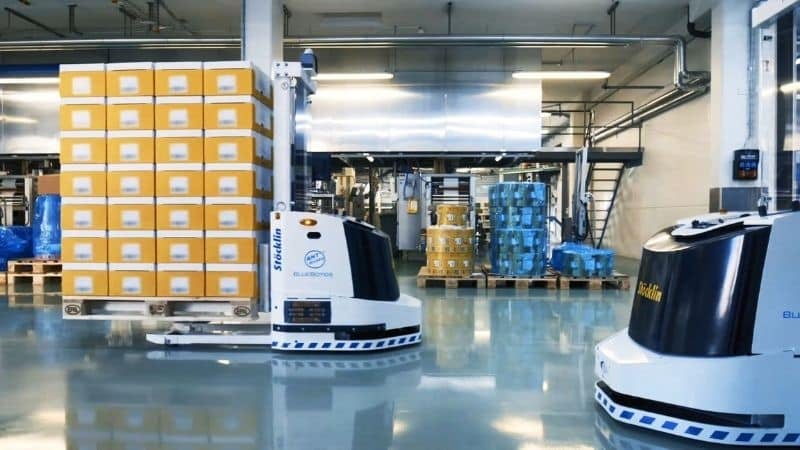
How will workers react to their new colleagues? Image credit: Stöcklin Logistik AG
Let's get started
Take the first step to automating your vehicle.
Schedule a call with our expert team today.